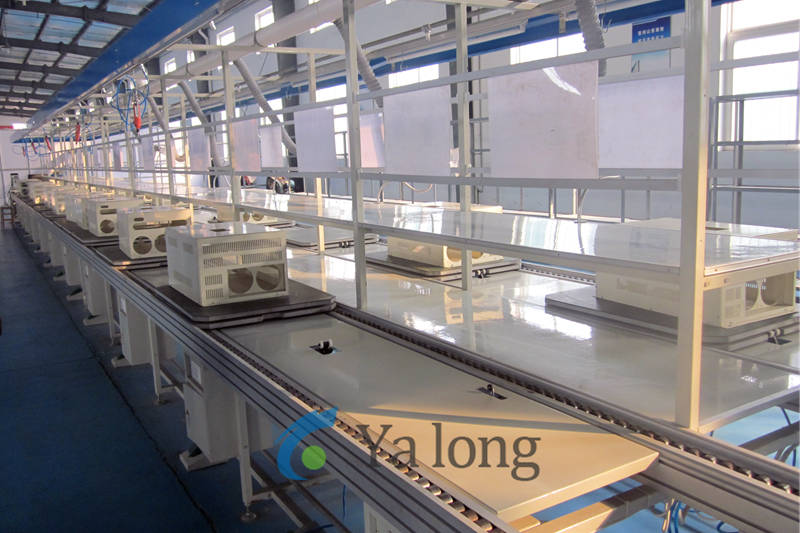
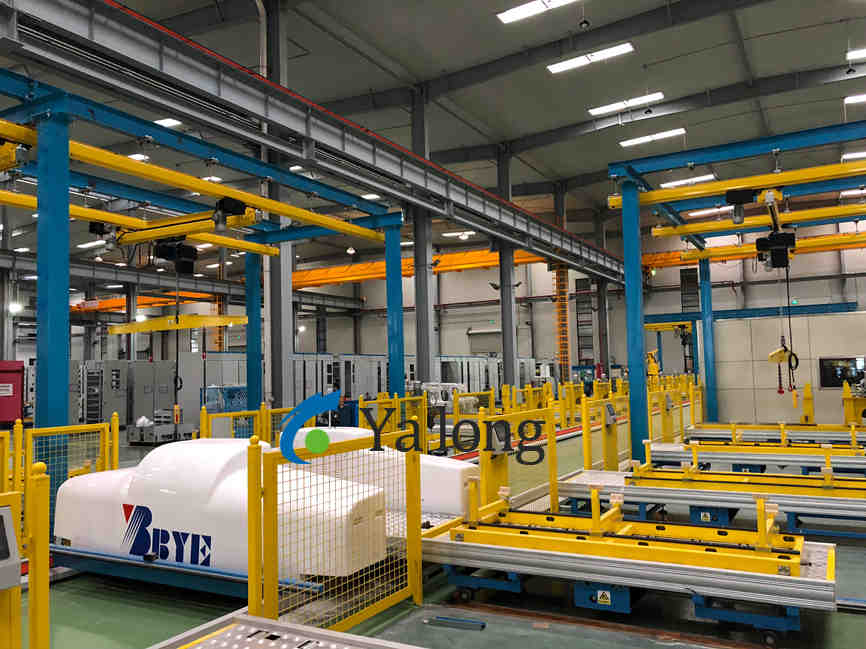
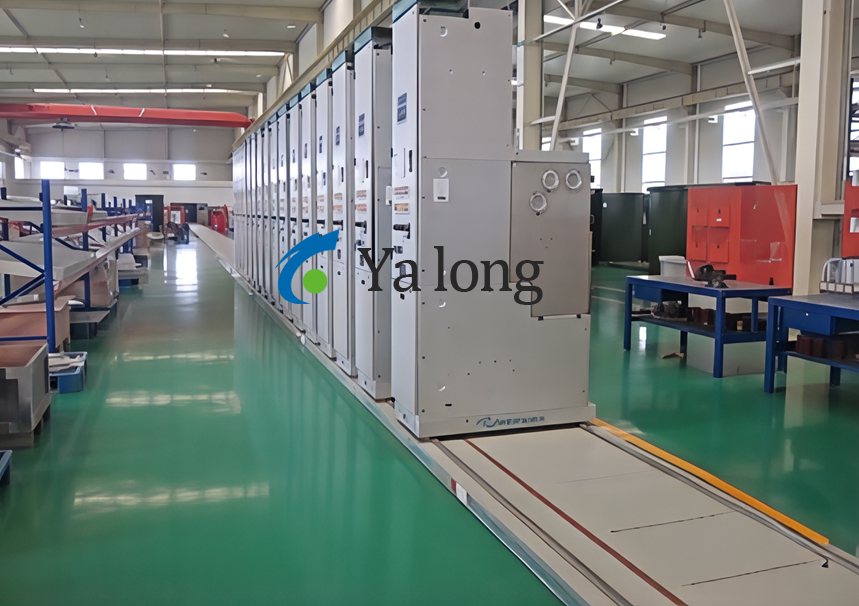
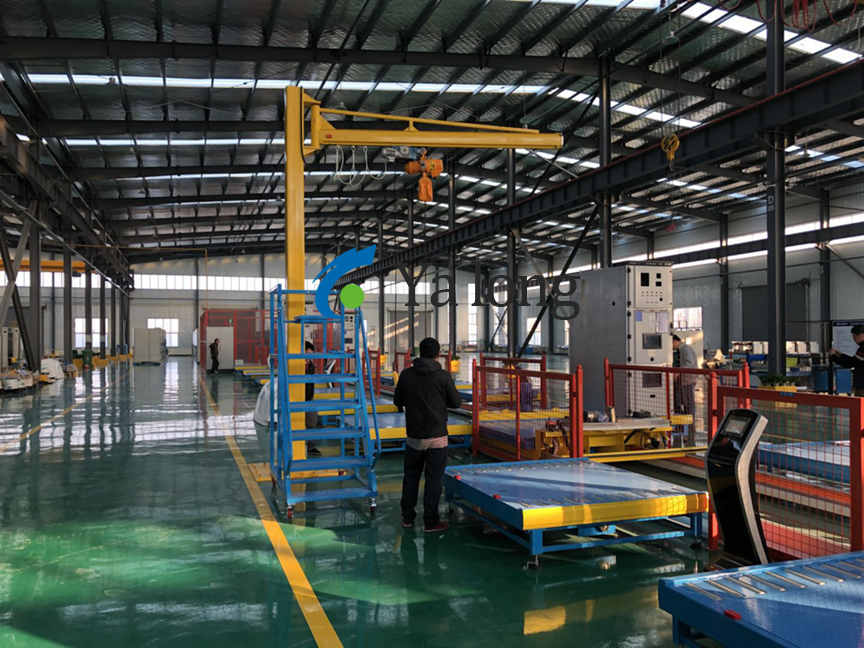
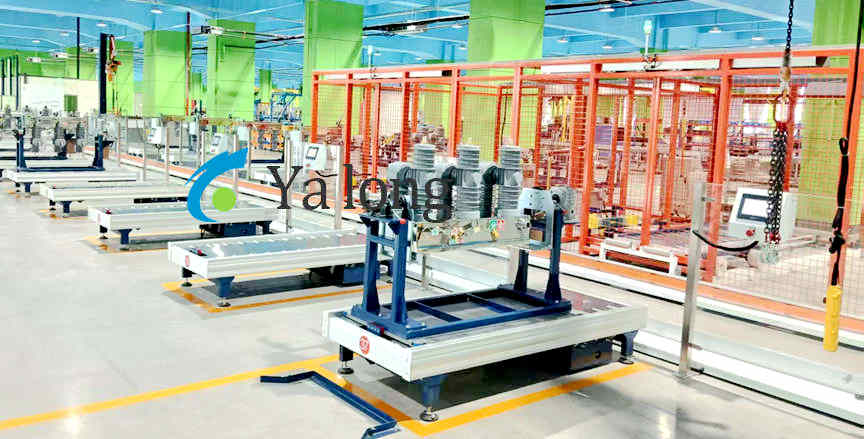
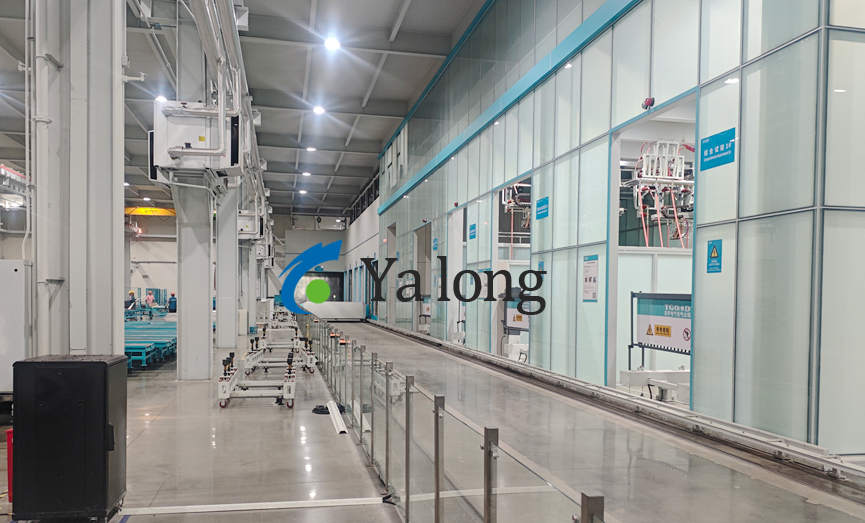
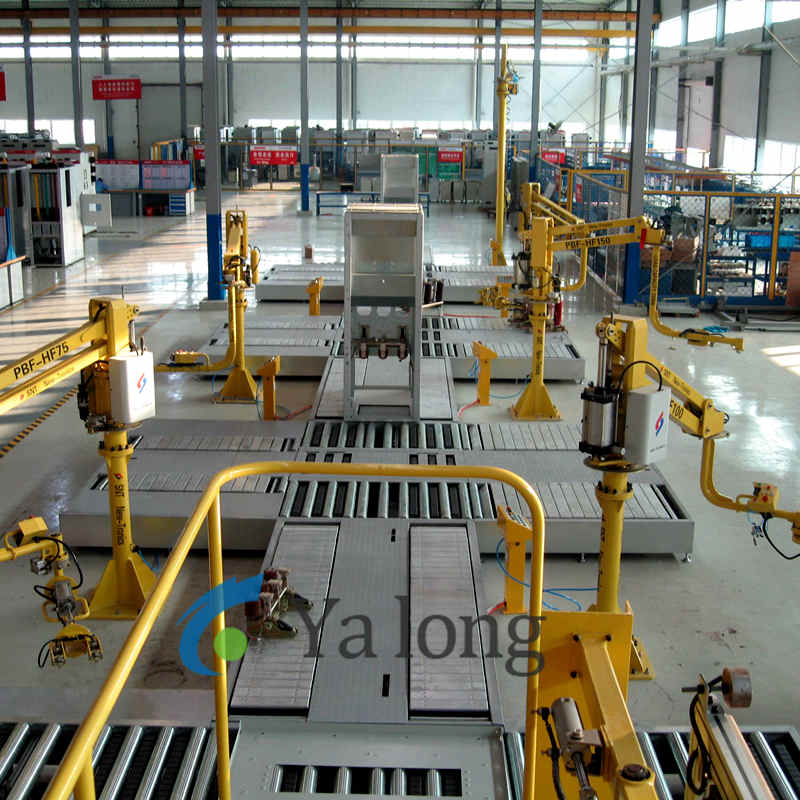
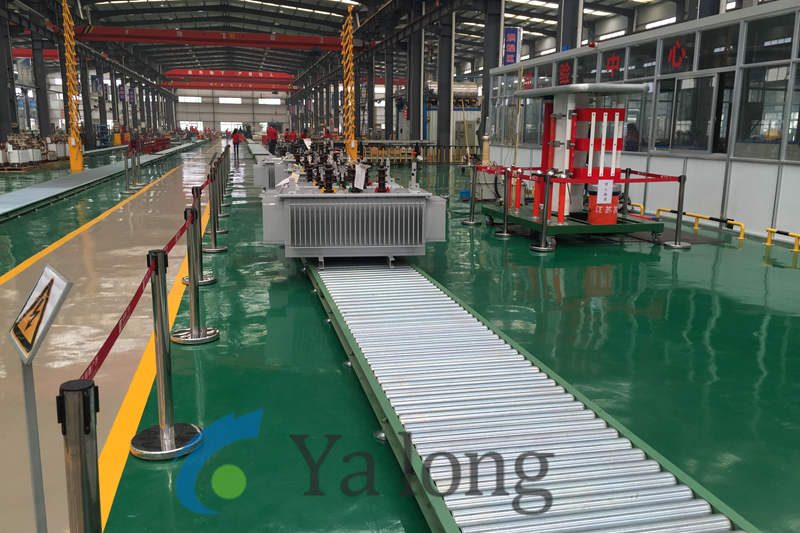
The inverter production line adopts a speed‑multiplying chain assembly line with circulating tooling pallets to complete the full‑process assembly and testing of string‑type photovoltaic inverters in sequence: starting from shell feeding and positioning, the process proceeds to pre‑assembly of internal structural components, assembly of power devices such as IGBTs (including thermal grease application and torque fastening), installation of circuit boards and wire harness connection, crimping and sorting of AC‑DC cables, pre‑assembly of fan modules and preliminary placement of cover plates. Afterwards, manual visual re‑inspection and low‑voltage power‑on preliminary testing are performed, followed by core safety‑regulation and full‑function testing (ground‑continuity test, insulation resistance test, AC‑DC withstand‑voltage test and protection‑function verification). Qualified products then undergo load‑bearing aging screening while carried on tooling pallets. Upon completion of aging, the whole‑unit cover plate is tightened for encapsulation. Laser marking generates a unique serial number, which is bound to the MES system to realize full‑process traceability. Finally, qualified finished products are off‑line and packed, and empty tooling pallets automatically return via the lower‑layer track for recycling.
Inverter Assembly Line (IAL) Technical Overview
I. Core Conveying System
- Continuous Belt Conveyor Line (CBCL): Smooth product flow, low friction
- Double-Speed Chain Line (DSCL): Fast transfer + slow positioning (precision ±0.5mm)
- Function: Avoid stagnation, ↑ rhythm efficiency by 30%
II. Product Scope & Applications
- Products:
- Household/Commercial inverters
- Energy Storage Converters (PCS)
- Applications:
- PV/Wind Power Generation
- EV Charging Systems
- Grid Energy Storage (ESS)
III. Automated Production Process
- Robotic Assembly (ROB):
- 6-axis robots for component placement/welding (accuracy ±0.1mm)
- Automated screw fastening (torque ±3%)
- Functional Validation Testing (FVT):
- Input/output stability test (±1% voltage tolerance)
- Efficiency curve verification (EN 50530 compliant)
- Power curve analysis (Sandia Model)
- EMC Compliance:
- Surge immunity test (±4kV)
- Radiated emissions screening (≤30dBμV/m)
IV. Hybrid Production Model
- Automated Transport (ATC): CBCL/DSCL material flow
- Manual Precision Control (MPC): Human oversight for critical alignments
Custom Specification Table for Speed‑Multiply Chain Assembly Line (Dedicated for Inverter Assembly · All Parameters Customizable)
This is non‑standard custom‑built equipment. All dimensions, stations, speed, load capacity and configurations can be customized on demand, adapting to production of string‑type PV inverters of various power ratings, benchmarking against Yalong’s new‑energy assembly line standards.
| Item | Specification (Customizable) | Remarks |
|---|---|---|
| Line Type | 2.5‑speed‑multiply chain assembly line (speed‑multiply ratio customizable) | 2.5‑times accelerated accumulating conveying; multiplier and conveying mode adjustable as required |
| Applicable Products | String‑type PV inverter (adaptable size & weight customizable) | General adaptation: single unit 15‑60 kg; housing dimension 300‑750 mm(L) × 250‑550 mm(W). Can be widened and heightened for high‑power models |
| Number of Effective Stations | 10‑14 stations (quantity can be increased or decreased) | Including assembly, inspection and burn‑in stations; quantity freely adjustable according to capacity requirements |
| Overall Line Length | 24‑40 m (customizable on demand) | Flexible overall length based on station quantity and station spacing |
| Line Width | 1200‑1600 mm (widenable) | Including tooling pallets and bilateral operation space; can be widened for larger‑size products |
| Tooling Pallet Dimension | 800×600 mm (fully customizable) | Anti‑static pallet with positioning fixtures and rubber buffers; dedicated product‑positioning jigs can be added |
| Tooling Pallet Load Capacity | Max. 80 kg (load capacity upgradable) | Load‑bearing capacity can be upgraded for assembly of high‑power energy‑storage inverters |
| Repeat Positioning Accuracy | ±0.5 mm (fine‑tunable) | Positioning via stop cylinders and photoelectric sensors, meeting requirements for precision assembly and testing stations |
| Conveying Speed | 0.5‑3 m/min (variable‑frequency adjustable, customizable) | Theoretical upper limit 6 m/min; typical mass‑production range 0.8‑2 m/min; full‑line speed range configurable |
| Frame Material | Industrial aluminum profile 4080 / 50100 (replaceable) | Carbon‑steel powder‑coated frame is optional for different budgets and site conditions |
| Chain Material | Steel speed‑multiply chain (material grade customizable) | Ordinary carbon steel available; heat‑treated alloy‑steel wear‑resistant chains can be customized for two‑shift mass‑production |
| Return Mode | Lower‑layer automatic return (return structure customizable) | Automatic cyclic return for empty pallets; lifting‑transfer or horizontal‑translation return structures are optional |
| Drive Motor | Variable‑frequency drive motor (power matched on demand) | Power calculated and customized by manufacturer according to full‑line load to avoid full‑load stalling and over‑heating tripping |
| Power Supply Configuration | Station AC220V / 380V; socket quantity customizable | 2‑4 sockets standard per station; adjustable AC‑DC power interfaces can be customized for burn‑in stations |
| Pneumatic Supply Configuration | 0.4‑0.6 MPa compressed‑air pipeline (layout customizable) | Quick‑connect fittings standard for each station; pipeline layout can follow on‑site workshop conditions |
| Station Auxiliaries | Hangers, display boards, lighting (configurable) | Aluminum‑profile material hangers, display‑board hooks, station lamps; items can be added or removed |
| Control System | PLC + variable‑frequency motor + stop‑cylinder control (programmable) | Accurate station stopping; logic for defective‑pallet locking and non‑leakage flow can be customized |
| Optional Accessories | All optional functions customizable for retrofitting | MES scanning interface, powered burn‑in trolley conductor rail, defective‑product rework branch line, lifting transfer machine, etc. The trolley conductor rail is equipped with full‑insulation protection and leakage protection to prevent dust‑caused spark risks |
| Floor Requirement | Floor standard adaptable and customizable | Ordinary cement floor; anti‑static rubber flooring can be laid on request; floor levelness error ≤0.5 mm/m |
Supplementary Notes
- The inverter assembly line is fully non‑standard custom‑built equipment. Line dimensions, station quantity, conveying speed, load‑bearing capacity and auxiliary configurations can be flexibly adjusted according to customer product specifications, capacity demands and workshop space, suitable for manufacturing low‑to‑high‑power string‑type and energy‑storage inverters.
- Core optional customization for burn‑in station: powered trolley‑conductor‑rail system enables powered burn‑in while tooling pallets are moving, satisfying continuous mass‑production requirements. The conductor rail is fitted with insulation protection and leakage‑protection devices to guarantee workshop production safety.
- The full‑line program supports customized error‑proofing and non‑leakage‑flow logic. Defective products are automatically locked and isolated for intelligent and standardized mass‑production management. Connection to factory MES system is available to achieve full‑process traceability.