Ring Main Unit (RMU, also known as ring‑network load switchgear) is core power supply switching equipment applied in medium‑voltage distribution networks (mainly 10 kV/20 kV). Featuring a metal‑enclosed enclosure, it integrates components such as load switches, fuses, earthing switches and instrument transformers. It is specially designed for power distribution, line protection, fault isolation and flexible switching operations in ring‑type power supply systems. Its core value lies in that upon a fault occurring on a line section, it can open quickly to isolate the fault segment while the ring‑shaped circuit maintains power supply from the other side. This greatly improves power‑supply reliability and reduces outage scope. With additional merits of compact structure, small footprint, easy operation and maintenance and low cost, RMUs are widely deployed in residential communities, industrial parks, commercial complexes, municipal distribution networks, PV booster stations and data‑centre sites.
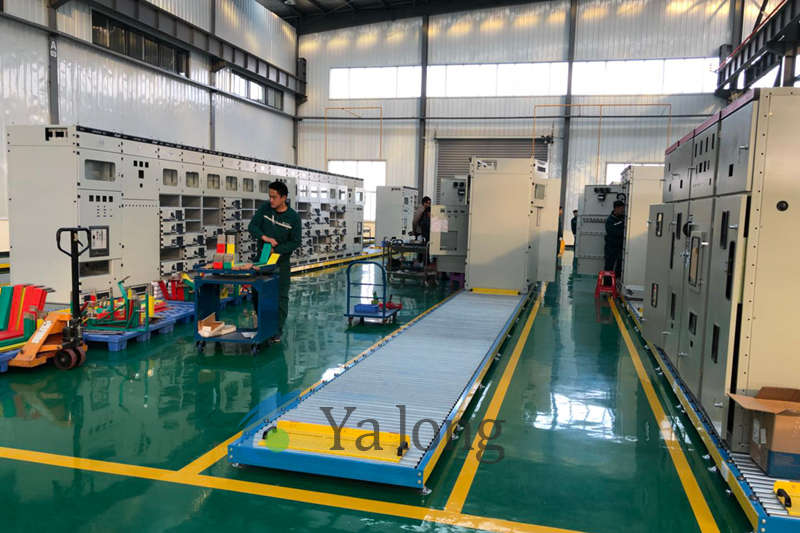
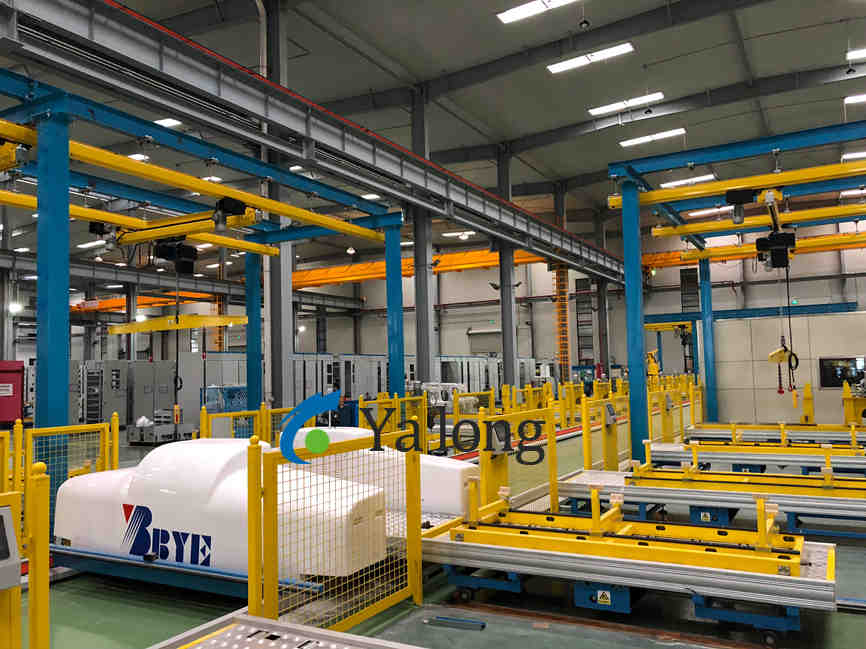
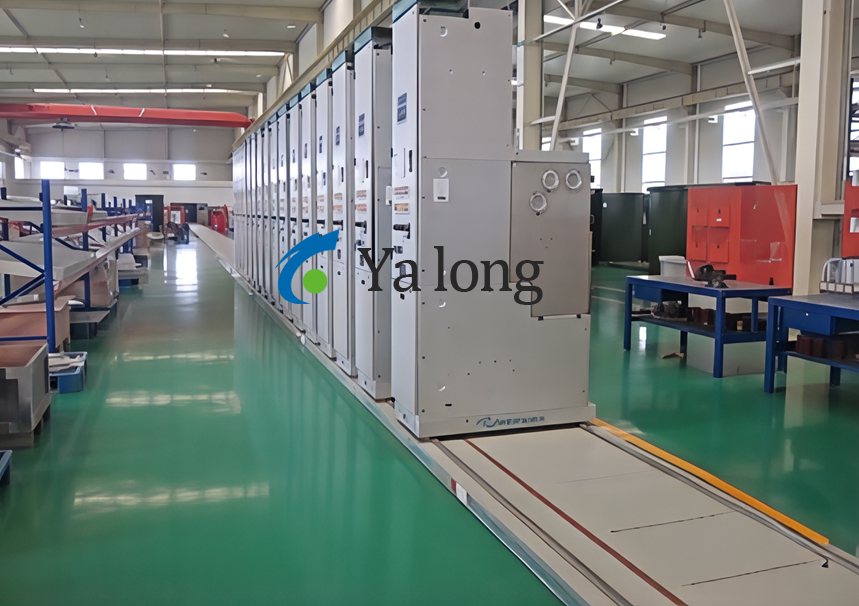
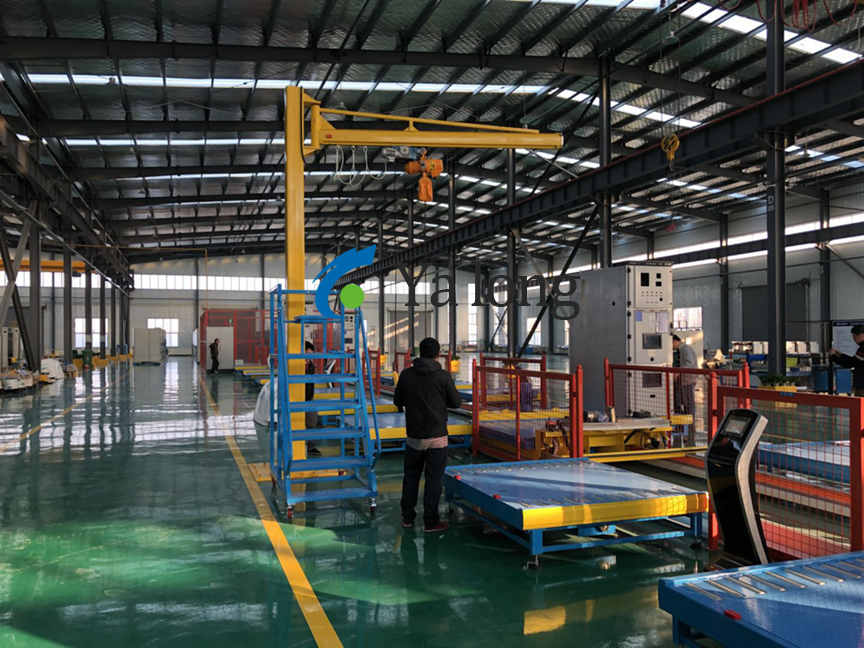
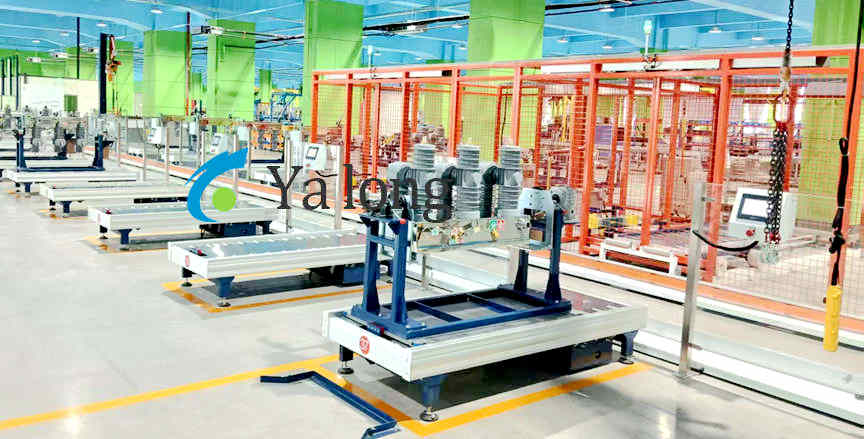
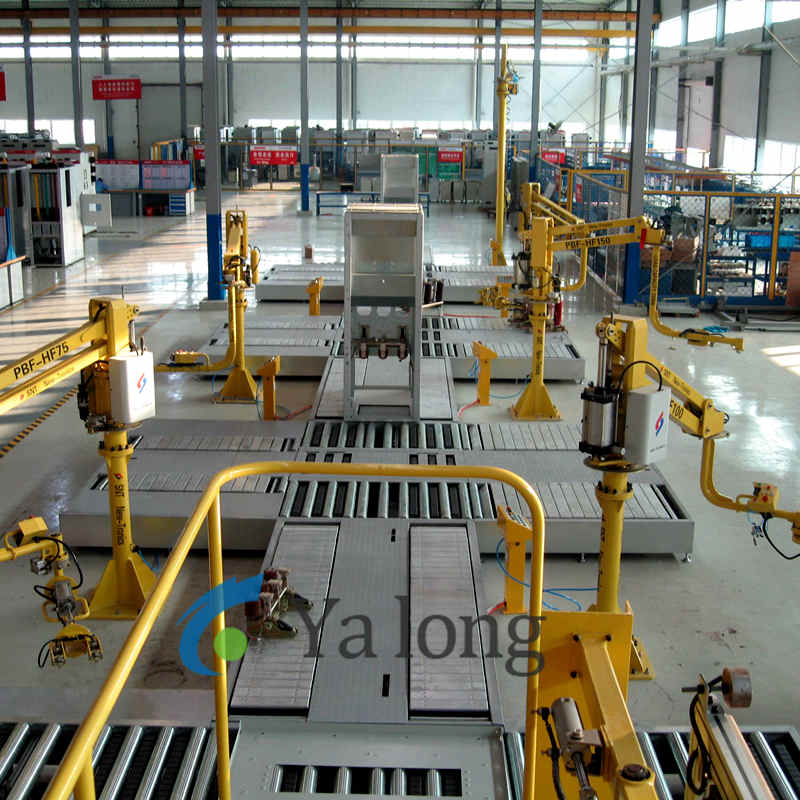
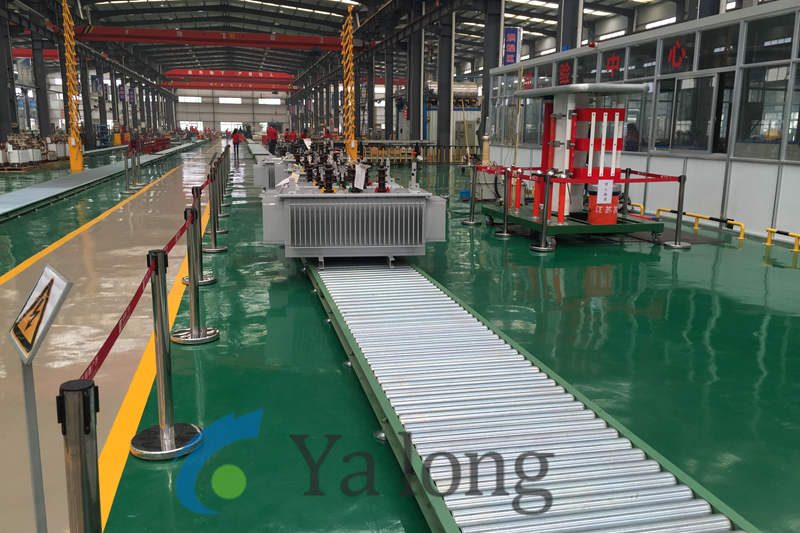
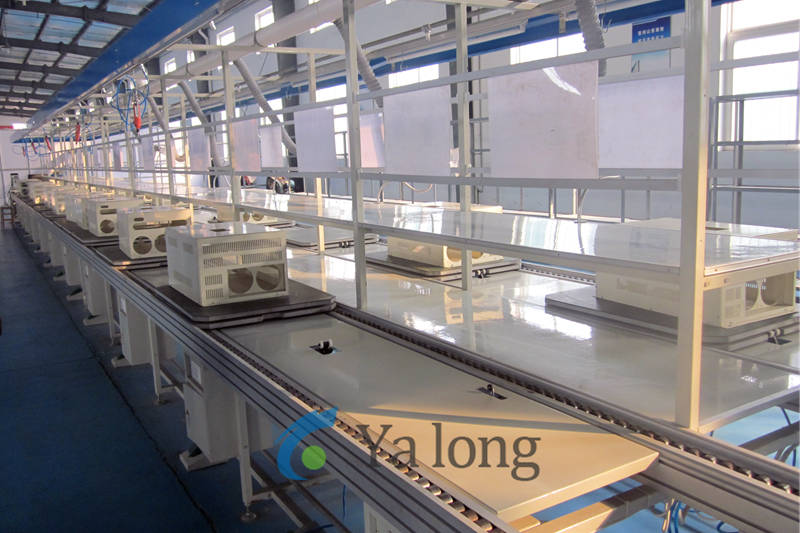
In manufacturing, ground roller conveyor lines are commonly adopted for assembly on RMU production lines. The complete RMU production line is built on blue steel frames densely fitted with free‑running rollers. Cabinet units can be smoothly pushed between workstations via the rollers, enabling process transfer of heavy‑duty cabinets without hoisting. The production line is divided by process into multiple workstations: cabinet assembly, primary‑component installation (load switches, fuses, earthing switches, etc.), busbar connection, secondary wiring, insulation inspection and withstand‑voltage test, and finished‑product packaging. Each workstation is equipped with special tool trolleys and material turnover zones. Operators perform fixed‑station work while cabinets advance sequentially, realizing tact‑based production characterised by “fixed processes with moving products”. This roller‑conveyor solution delivers simple construction, high load‑bearing capacity and low maintenance cost. It satisfies flexible‑production requirements for multi‑variant, small‑batch RMU manufacturing. Process decomposition also enhances assembly consistency and production efficiency, making it a typical layout for workshops producing medium‑voltage complete switchgear.
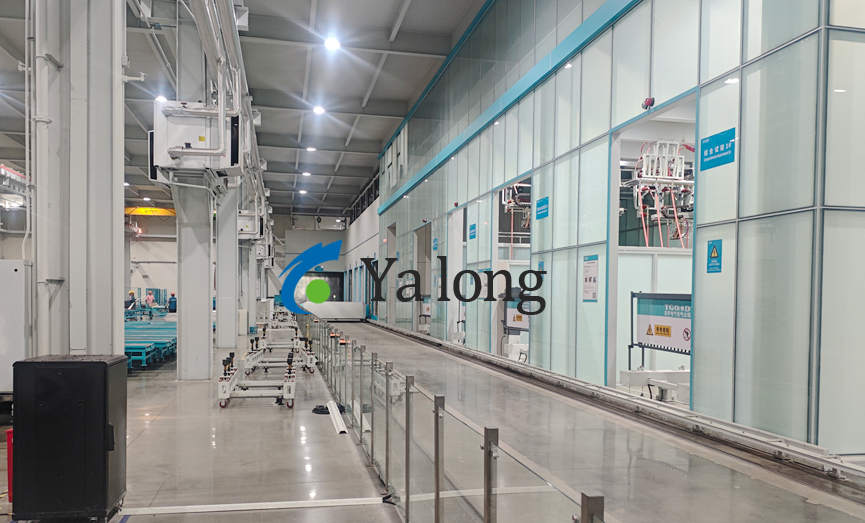
It should be noted that RMU production lines are non‑standard custom‑built equipment with no universal standard specifications. Layout design must be custom‑planned according to the customer’s actual plant area, ceiling height and load‑bearing capacity, target output and product model range, assembly‑process sequence, material‑delivery routes, and locations for inspection and test zones. For instance, a straight‑line or U‑shaped return layout suits narrow and long workshops, whereas a loop‑type or multi‑branch parallel layout may be adopted for square workshops with high production capacity. Space must also be reserved for cabinet hoisting passages, semi‑finished‑goods buffer zones and finished‑goods shipping areas to guarantee smooth logistics and tight process coupling from component warehousing to finished‑product dispatch. Accordingly, a well‑engineered RMU production‑line solution normally requires joint site surveys and repeated technical discussions between suppliers and manufacturers before final confirmation.
Ring Network Cabinet (RNC) Assembly Line Technical Specification
Core Process Architecture
1. Dual-Line Collaborative System
- High-Low Layout:
- Assembly Line (Upper): Skeleton splicing mechanisms
- Ground Rail Line (Lower): Component assembly mechanisms
- Automated Turning Structure:
- 90° auto-rotation transfer between lines
- Positioning accuracy: ±0.1mm
2. Roller Conveyor System
- Main Line: Powered roller conveyor (PRC)
- Double-Side Roller Tracks:
- Jacking Transfer Tables (JTT): Lift range 0–300mm
- Assembly Stations: Horizontal alignment with JTT (±0.5mm)
- Power Roller Integration:
- Station table ↔ JTT synchronized transfer