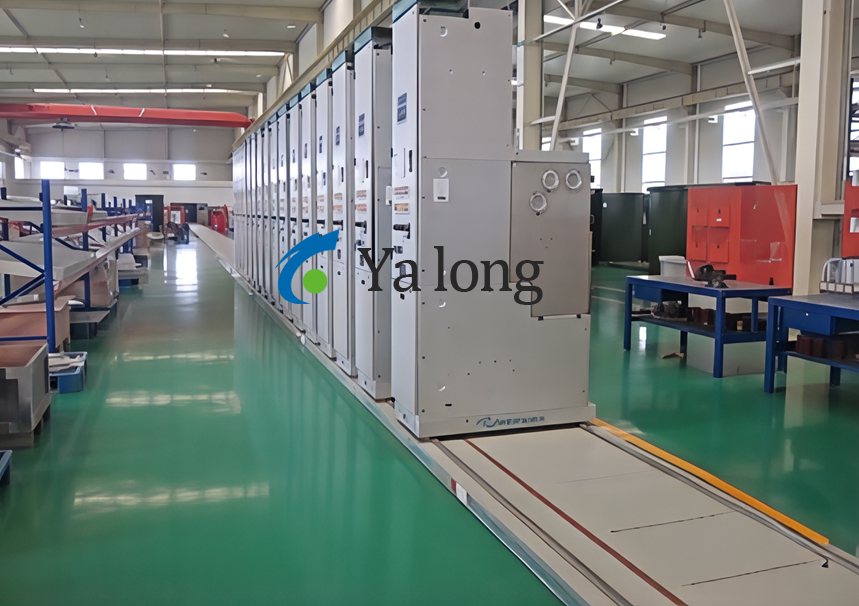
Switchgears (switching equipment) are core electrical devices in power systems used to connect and disconnect circuits, as well as perform protection, control and monitoring functions. According to voltage levels, they are divided into high‑voltage switchgears (such as KYN28 and XGN series) and low‑voltage switchgears (such as GGD, GCS and MNS series). Adopting metal‑enclosed cabinets as housings, they integrate internal components including circuit breakers, disconnectors, load switches, transformers, busbars and relay protection devices. Widely deployed in power plants, substations, industrial and mining enterprises, commercial buildings, municipal power distribution networks and new‑energy power stations, they undertake critical functions of power distribution, circuit protection, fault isolation and operation monitoring, serving as indispensable basic equipment for ensuring the safe and stable operation of power systems.
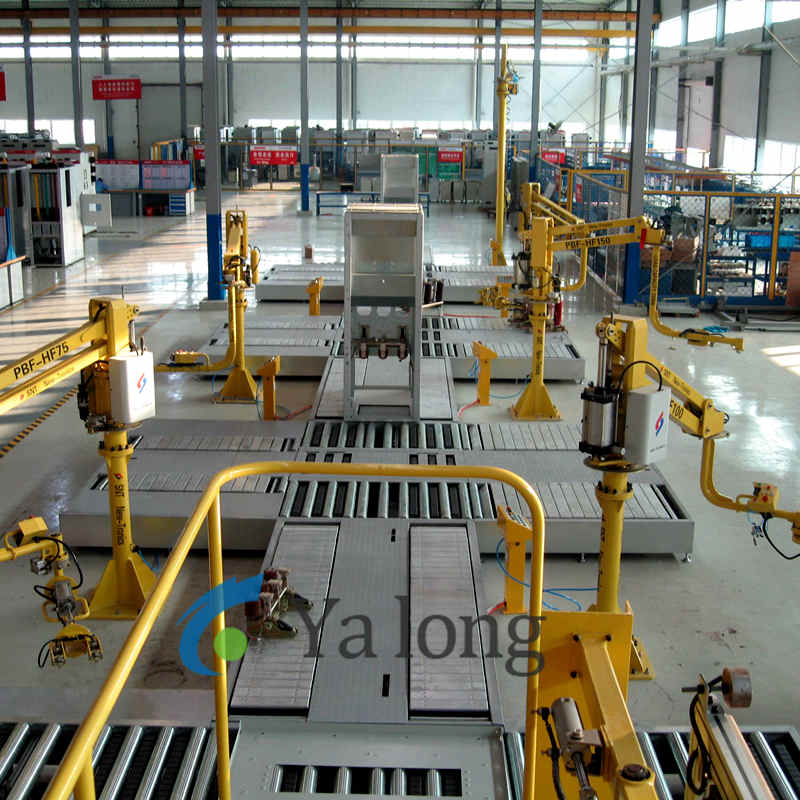
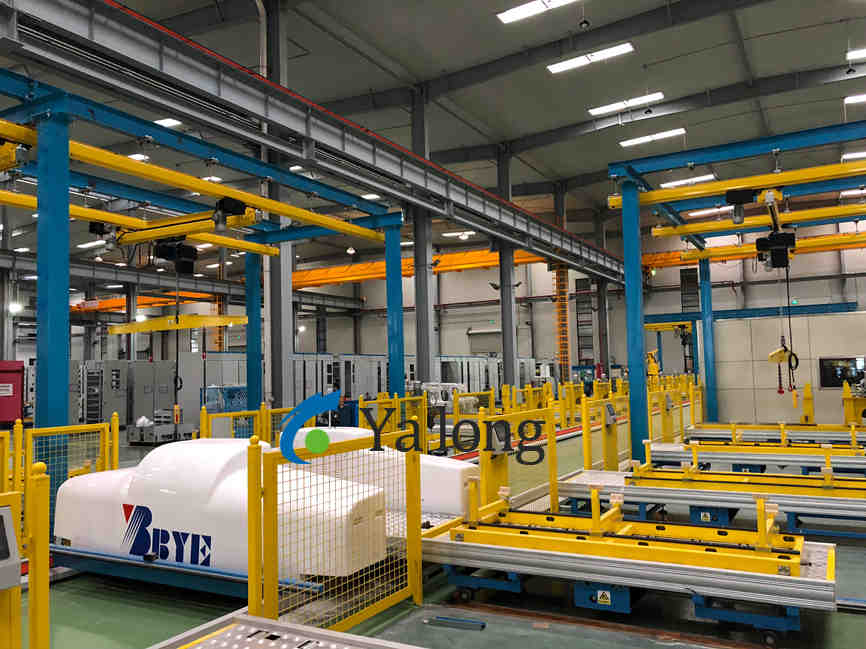
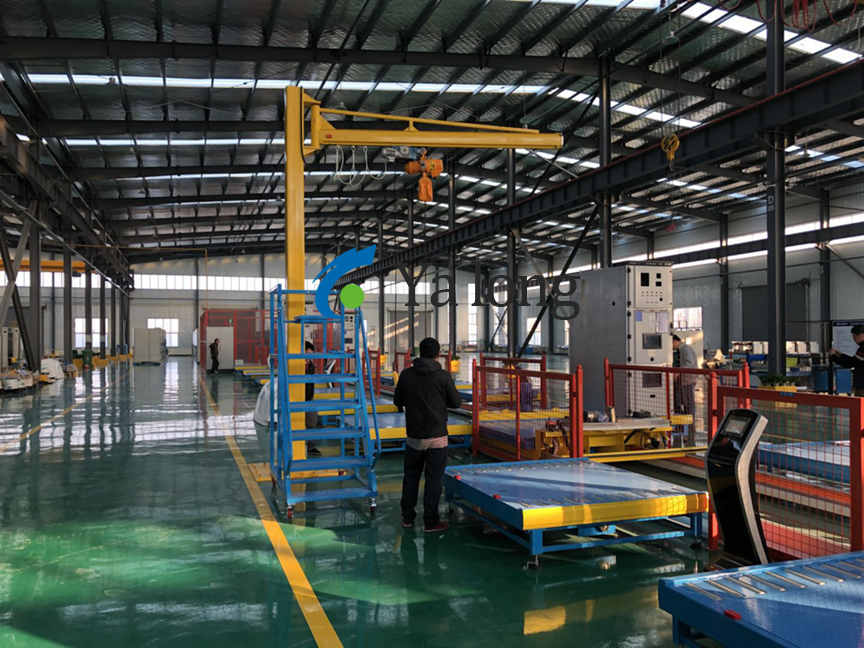
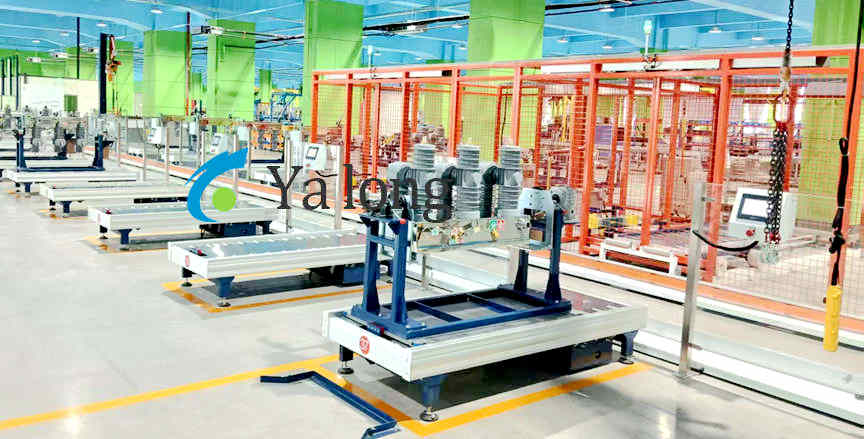
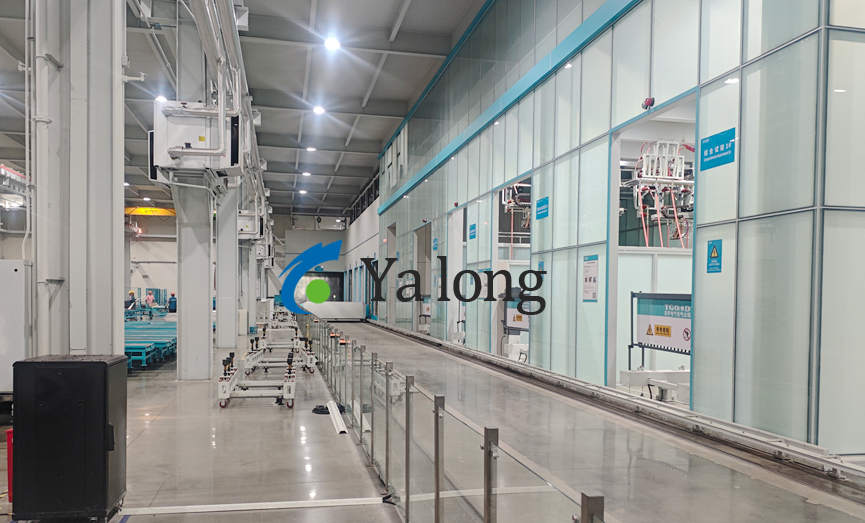
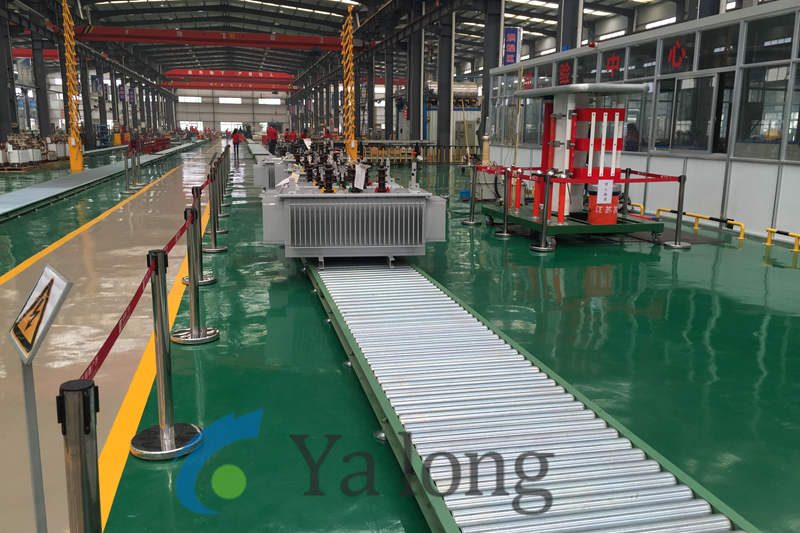
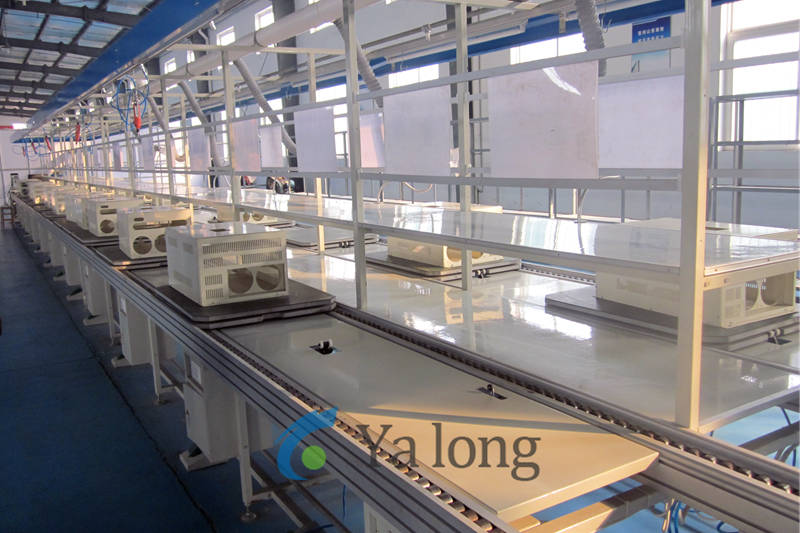
In the manufacturing process, automated assembly lines are commonly adopted for switchgear production. The entire switchgear production line centers on a modular roller/pallet conveying system. Cabinets are placed on tooling pallets and circulate automatically along the conveyor line, with lifting and transferring mechanisms realizing precise positioning and direction changing between workstations. Multiple industrial manipulators (power‑assist arms) are installed on both sides of the assembly line to handle heavy‑duty operations such as cabinet hoisting, large‑component assembly and flipping positioning, which effectively reduces manual labor intensity and improves assembly accuracy. The production line is divided into several workstations by process: cabinet assembly, primary component installation (circuit breakers, disconnectors, transformers, etc.), busbar connection, secondary wiring, insulation inspection and voltage withstand test, finished‑product commissioning and packaging. Each workstation is equipped with special tool racks and material distribution zones. Workers perform fixed‑point operations while cabinets move forward sequentially, realizing rhythmic and automated production characterized by “fixed processes and flowing products”. Featuring stable conveying, precise positioning and high human‑machine collaboration efficiency, this automated assembly‑line solution adapts to flexible production requirements for multi‑variety and small‑batch switchgear manufacturing. It also greatly enhances assembly consistency and production efficiency through process decomposition and mechanical assistance, representing a typical layout for intelligent manufacturing workshops of high‑ and low‑voltage complete switchgear equipment.
It should be noted that switchgear production lines are non‑standard customized products without unified standard specifications. Their layout schemes require special planning and design considering factors such as the customer’s actual plant area, floor height and load‑bearing conditions, target production capacity and product model scope (high‑/low‑voltage, different cabinet types), assembly process sequence, automation‑level requirements, material‑distribution routes and locations of inspection and test areas. For instance, straight‑line or U‑loop layouts are suitable for narrow and long plants, while loop or multi‑branch parallel layouts can be adopted for square plants with large production capacity. For highly‑automated production lines, overall planning shall also cover the working radius of manipulators, safety guard fences and equipment maintenance passages. Meanwhile, reserved zones for cabinet hoisting, semi‑finished‑product storage and finished‑product shipment shall be set aside to guarantee smooth full‑process logistics and compact process connection from component warehousing to finished‑product delivery. Therefore, a reasonable switchgear production line usually can only be finalized after joint site surveys and repeated demonstrations by suppliers and manufacturers.
Switchgear Cabinet Assembly Line (SC Line) Technical Specification
I. Core Workstations
| Station | Function | Key Technologies |
|---|---|---|
| Shell Assembly | Cabinet frame welding/alignment | Laser-guided positioning (±0.1mm) |
| Busbar Installation | Copper bar cutting/bending/installation | CNC bending angle precision: ±0.5° |
| Secondary Wiring | Control circuit harness assembly | Automated wire termination (OTP crimping) |
| Testing | Hi-pot/contact resistance/functional test | Automated test sequencer (IEC 61439) |
II. Automated Material Handling
Integrated Systems
- Roller/Plate Chain/Dual-Speed Chain Conveyors
- Load capacity: 1,500 kg/m
- Speed: 0.2–5 m/min (VFD adjustable)
- Test Modules:
- Run-in Test Bench: 24h continuous operation simulation
- Anechoic Chamber: Noise emission ≤65 dB (EN 62208)
- Hi-pot Test: AC 3.5kV/1min (IEC 60439)
III. Intelligent Technologies
1. Robotic Automation
- 6-Axis Robots:
- Busbar handling: ±0.05mm repeatability
- Secondary wiring: Auto-screwdriving (torque ±1%)
- Cobot Stations: Human-robot collaborative component feeding
2. AI Vision Inspection
- Defect Detection:
- Sheet metal: Burrs (≥0.3mm)/hole deviation (±0.2mm)
- Wiring: Misrouting/cross-phase errors (99.9% accuracy)
- Real-time Alerts: MES-integrated defect mapping
3. Digital Twin Integration
- Virtual Simulation:
- Process optimization: Bending angle/spray thickness prediction
- Energy consumption: Digital energy model (↓15% trial cost)
- Dynamic Adjustment:
- Changeover time: ≤8 min (model/parameter switch)